
Not all processing is the problem
Cooking, freezing, fermenting, pasteurising and canning are all forms of processing. Humans have used them for generations because they make food safer, easier to store and better to eat.
Frozen vegetables, canned lentils, plain yoghurt and a good loaf of bread are not the villains here. They still look and behave like food. The trouble starts when the original ingredient disappears and the factory has to engineer the flavour, texture and colour back in.
When food becomes a formulation
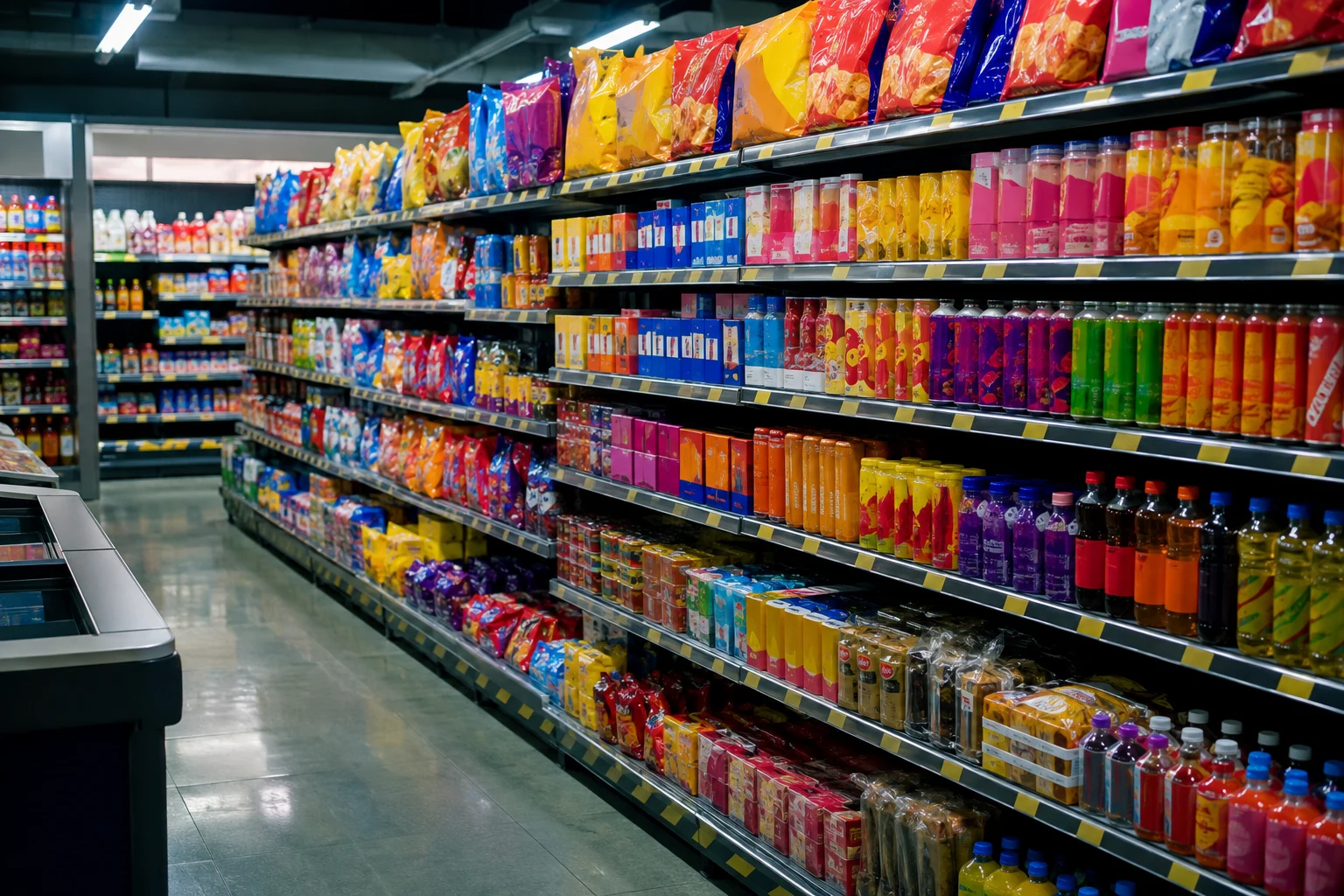
Ultra-processed foods are generally industrial formulations assembled from refined ingredients, flavours, colours, emulsifiers and other additives, often with very little intact whole food left. Think soft drinks, confectionery, reconstituted meat products and the snack aisle designed to keep your hand returning to the packet.
The label is not a flawless verdict on every individual product, and the World Health Organization is still developing formal guidance. But we do not need to wait for a perfect definition to recognise the pattern: food made to be cheap, hyper-palatable, endlessly convenient and difficult to stop eating.
The problem is rarely one mysterious additive. It is the whole product, engineered to replace real food and keep you reaching for more.
The blunt trolley test
Turn the packet around. Is there a recognisable food at the centre of it? Does it provide useful protein or fibre? Is sugar, refined starch, salt and flavour doing most of the work? If you would struggle to recreate anything close to it in a normal kitchen, treat it as a sometimes food.
Then be honest about frequency. One packaged convenience inside a week of home-cooked meals is moderation. A trolley built around boxes, pouches, bars and bottles is a food system running your household. Start replacing one regular product at a time with ingredients you can chop, cook and recognise.
Where this comes from
We favour recognised Australian health bodies, research-led institutions and primary public-health sources.