
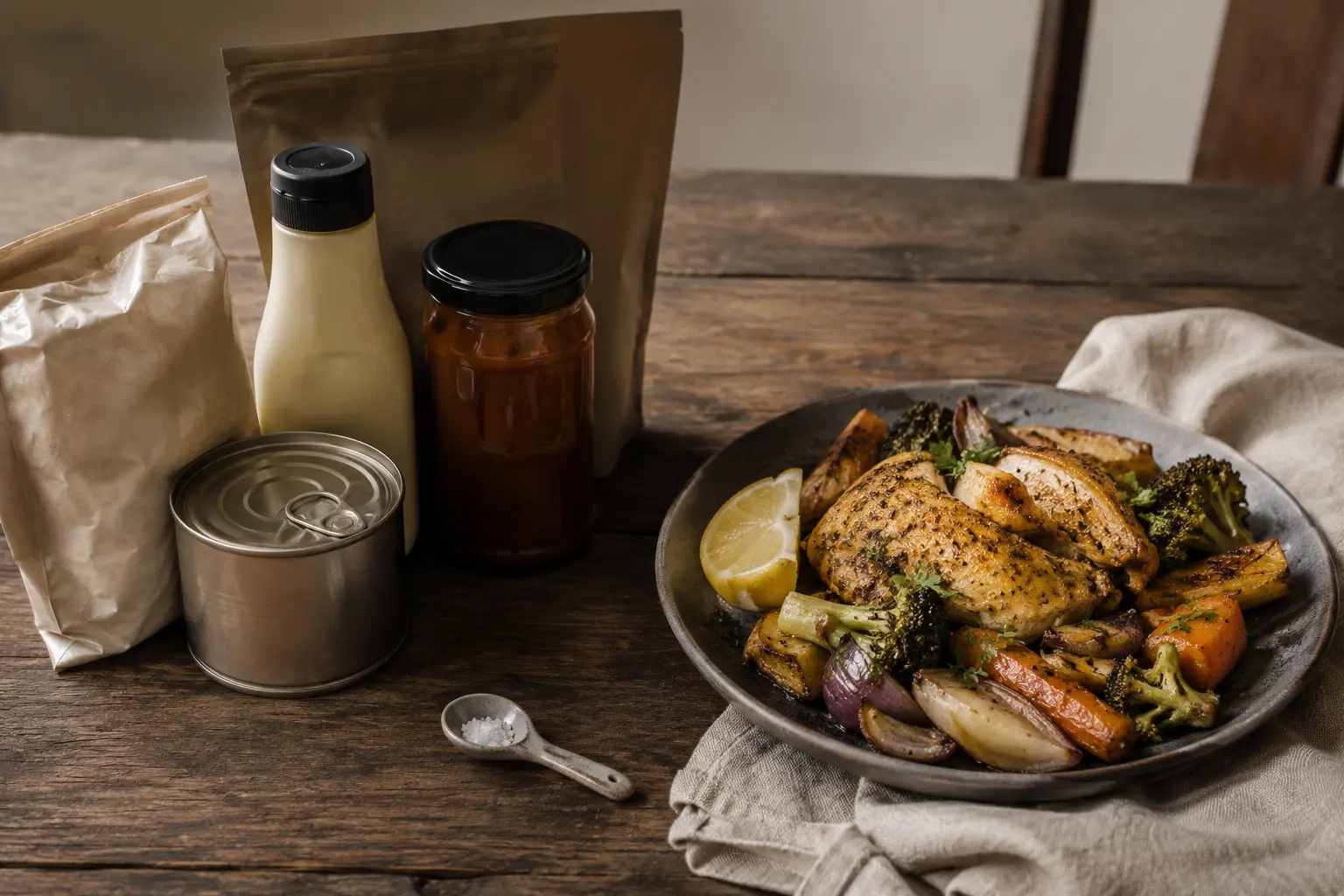
Visible salt is only part of the total
Salt contains sodium, and sodium helps regulate fluid balance, nerves and muscles. The problem is chronic excess. WHO identifies high sodium intake as a contributor to raised blood pressure and cardiovascular disease.
Packaged food can deliver large amounts before the shaker reaches the table. Bread, deli meat, cheese, stock, bottled sauces, instant noodles, savoury snacks and takeaway all contribute. None has to taste aggressively salty on its own for the daily total to climb.
Use the panel, not the front
Marketing language such as natural, plant-based or high protein does not tell you the sodium content. Turn the product around and compare sodium per 100 g with similar options. Per-serve figures are easy to manipulate with an unrealistically small serve.
Look for foods that earn their sodium by doing a job. Parmesan, olives, miso and soy sauce bring concentrated flavour in small amounts. A bland ready meal can deliver far more sodium while still needing extra seasoning.
Season real food deliberately. Do not let the factory season your whole day by accident.
Build flavour without making food sad
Use lemon, vinegar, chilli, pepper, garlic-infused oil, ginger, cumin, paprika and fresh herbs. Brown ingredients properly. Roast vegetables hard enough to create flavour. Add a measured salty ingredient where it matters instead of scattering processed food through every meal.
People with hypertension, kidney disease, heart failure or other medical conditions may need individual sodium advice. For everyone else, cooking more of the food remains the simplest way to see and control what went into it.
Where this comes from
We favour recognised Australian health bodies, research-led institutions and primary public-health sources.