
The useful part of red meat
Beef, lamb and pork provide high-quality protein plus iron, zinc and vitamin B12. Those nutrients matter, and red meat can be a practical way to obtain them. The issue is not that one steak behaves like poison the moment it reaches the plate.
Cancer Council NSW and the Australian Dietary Guidelines recommend limiting lean red meat to 455 g cooked, or 700 g raw, each week. That might look like several modest meals rather than one daily slab large enough to need its own chopping board.
Processing changes the evidence
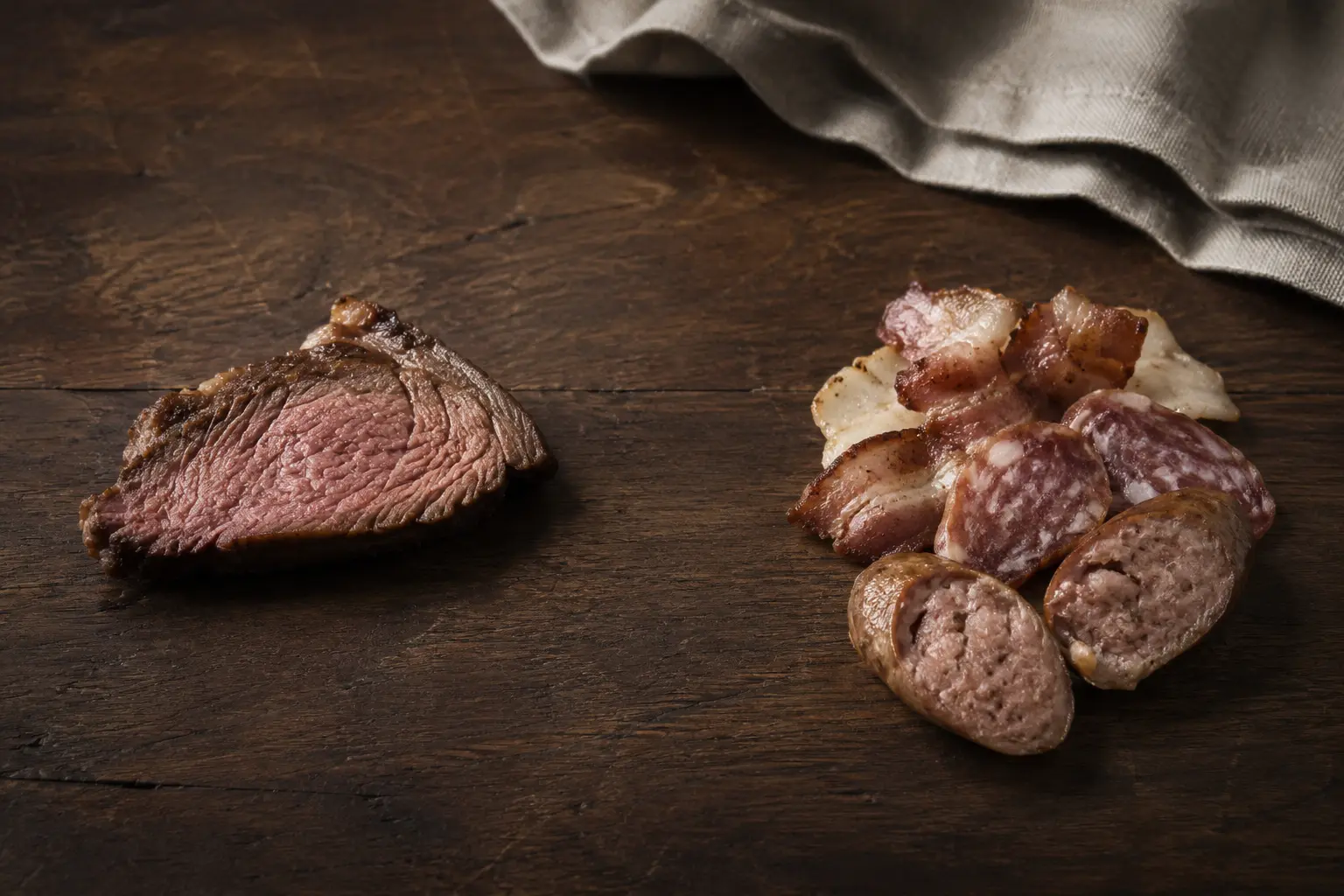
Processed meats include bacon, ham, salami, devon, frankfurts, chorizo and similar products preserved by smoking, curing, salting or added preservatives. Strong evidence links processed-meat consumption with bowel cancer, which is why Australian cancer-prevention advice is to eat little, if any.
That does not mean processed meat is as dangerous as tobacco per bite. Hazard classifications describe the confidence that something can cause cancer, not the size of risk from a normal exposure. The practical message is still clear enough: make processed meat occasional rather than an automatic breakfast and lunch ingredient.
Same supermarket aisle, different job in the weekly diet.
Use less meat better
Choose a smaller amount of good-quality fresh meat, cook it well and let vegetables, legumes or other sides carry more of the meal. Rotate in fish, chicken, eggs, tofu and legumes according to your dietary needs rather than asking one protein source to work seven days a week.
If you eat carnivore or very low carb, the distinction still matters. Fresh meat, eggs and seafood give you far more room to build a minimally processed pattern than a fridge drawer dominated by bacon and salami.
Where this comes from
We favour recognised Australian health bodies, research-led institutions and primary public-health sources.