
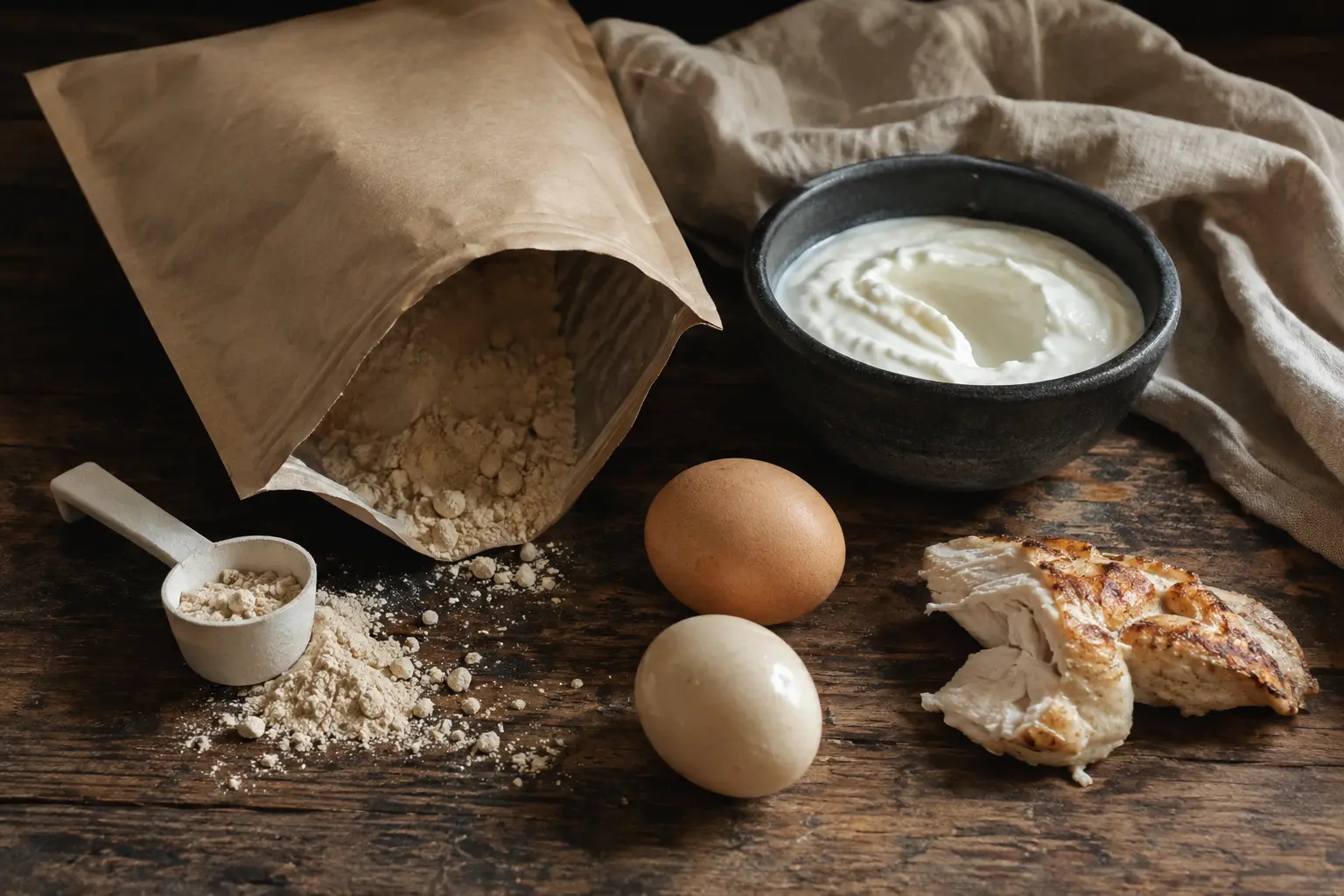
What the scoop actually contains
Whey, casein, soy, pea and other powders concentrate protein from a food source and remove much of everything else. A typical 30 g serve of whey can provide roughly 21 to 27 g of protein. That is useful density, particularly when you do not want or cannot manage a full meal.
It also means the powder brings less of the fibre, chewing, variety and broader nutrient mix found in a balanced meal. It should be judged as a tool, not awarded automatic health points because the tub is large and the typography looks athletic.
When convenience earns its place
The Australian Institute of Sport supports protein supplements in specific practical situations: around training, when appetite is suppressed, during travel, or when ordinary food is unavailable. It also notes that most athletes already achieve total protein targets without supplements.
A plain shake after a late session can be sensible. So can yoghurt, eggs, tuna, tofu or leftovers. The better option is the one you will actually tolerate, afford and use without turning every snack into flavoured sludge.
Buy a solution to a real problem, not a monthly subscription to feeling healthy.
Read past the protein number
Check protein per serve, ingredients, added sugars or sweeteners, caffeine, allergens and independent testing where sport rules matter. Whey concentrate contains more lactose than isolate, which may affect some people with intolerance.
Then ask the blunt question: could food do this job just as easily? If yes, eat the food. If no, use the scoop and move on. You do not need to build an identity around either answer.
Where this comes from
We favour recognised Australian health bodies, research-led institutions and primary public-health sources.