
Stop grading dinner by resemblance to meat
Lentils do not need to bleed. Tofu does not need fake grill marks stamped by a factory. Chickpeas have been feeding people properly for far longer than the freezer aisle has been selling beige discs as innovation.
Animal proteins generally contain all essential amino acids in proportions close to human needs. Individual plant foods may be lower in one or more, but eating a variety across the day covers that gap for most people. You do not need to combine exact proteins at every meal like a chemistry practical.
The fibre advantage
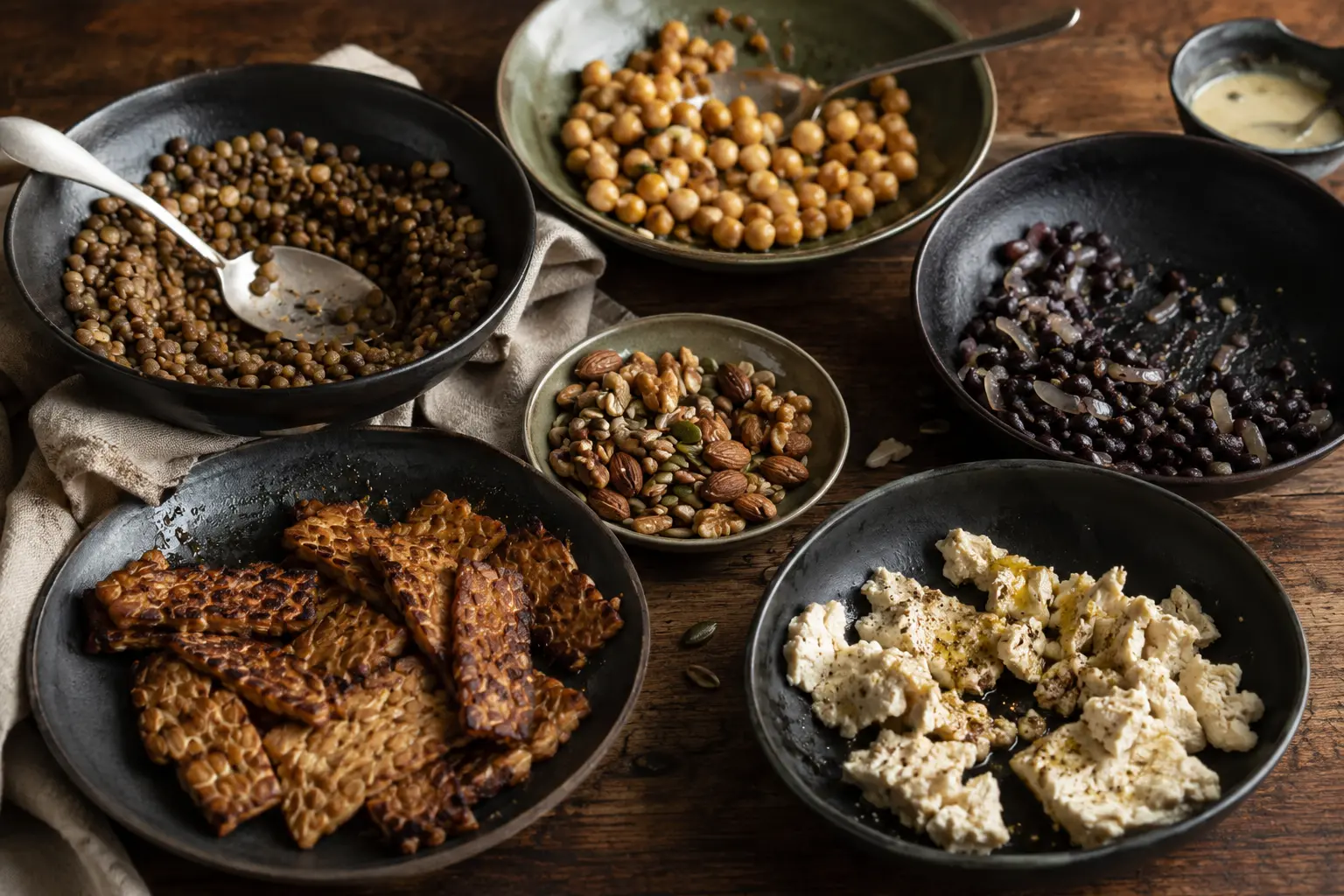
Beans, lentils, chickpeas and edamame provide protein and fibre together. Nuts and seeds add protein, healthy fats and minerals. Tofu and tempeh bring substantial protein in forms that absorb flavour and cook properly when treated with respect.
Heart Foundation guidance places legumes, tofu, nuts, seeds, fish and seafood among the most beneficial protein choices for heart health. That does not force everyone to become vegan. It does make a strong case for giving plant protein more than one reluctant Monday night.
A bean is allowed to be a bean. It does not need a laboratory costume to become dinner.
Plan the details that matter
Fully plant-based eaters need reliable vitamin B12 and should pay attention to iron, zinc, iodine, calcium, omega-3 fats and total energy. Protein needs can still be met through enough food and a broad mix of legumes, soy foods, grains, nuts and seeds.
Start with dishes that already make sense: lentil curry, tofu stir-fry, chickpea salad, black-bean chilli or tempeh satay. Real plant food tastes better when it stops auditioning for the role of chicken nugget.
Where this comes from
We favour recognised Australian health bodies, research-led institutions and primary public-health sources.