
Bacteria enjoy the middle temperatures
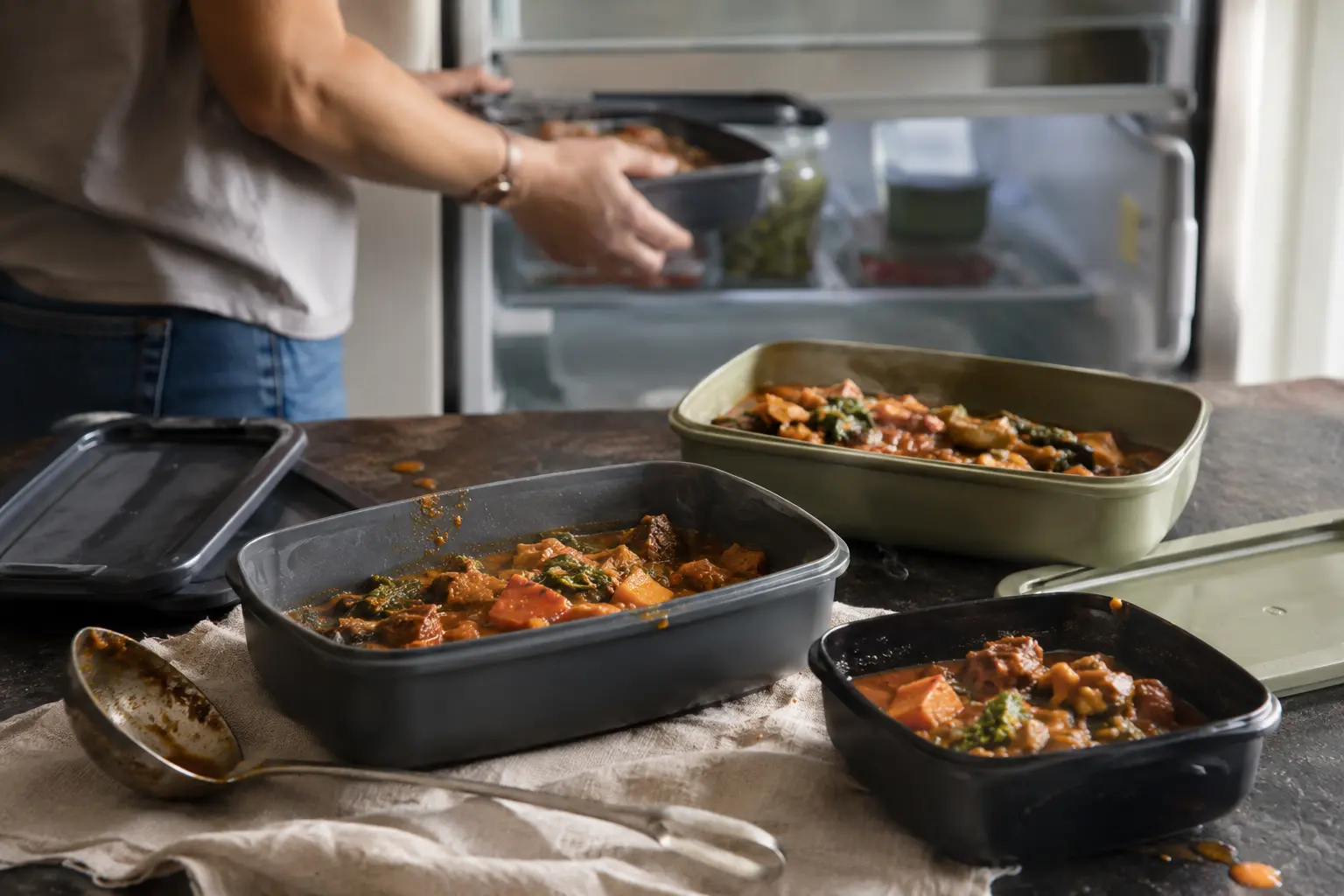
Potentially hazardous foods allow bacteria to grow when time and temperature line up. Large, deep containers cool slowly because the centre can stay warm long after the outside feels ready for the fridge.
FSANZ business guidance uses a two-stage rule: cool from 60°C to 21°C within two hours, then from 21°C to 5°C within a further four hours. Home kitchens may not carry temperature logs, but the principle is useful: portion food, use shallow containers and get it cold promptly.
The fridge is not a pause button
Keep the fridge at 5°C or colder, cover leftovers and date them. FSANZ advises using perishable leftovers within a few days; vulnerable people may need stricter one-day limits for certain foods.
If plans change, freeze portions while they are still safely within their refrigerated life. Do not wait until food looks tired and then use the freezer as witness protection.
Meal prep starts with cooking. Food safety finishes the job.
Reheat once and reheat properly
Reheat quickly until the food is piping or steaming hot all the way through. Stir soups, curries and casseroles so cold pockets do not hide in the centre. Thaw frozen food in the fridge or microwave, not on the bench.
Take out only the portion you need rather than warming and cooling the whole batch repeatedly. Good leftovers should make tomorrow easier, not turn dinner into a gamble.
Where this comes from
We favour recognised Australian health bodies, research-led institutions and primary public-health sources.