
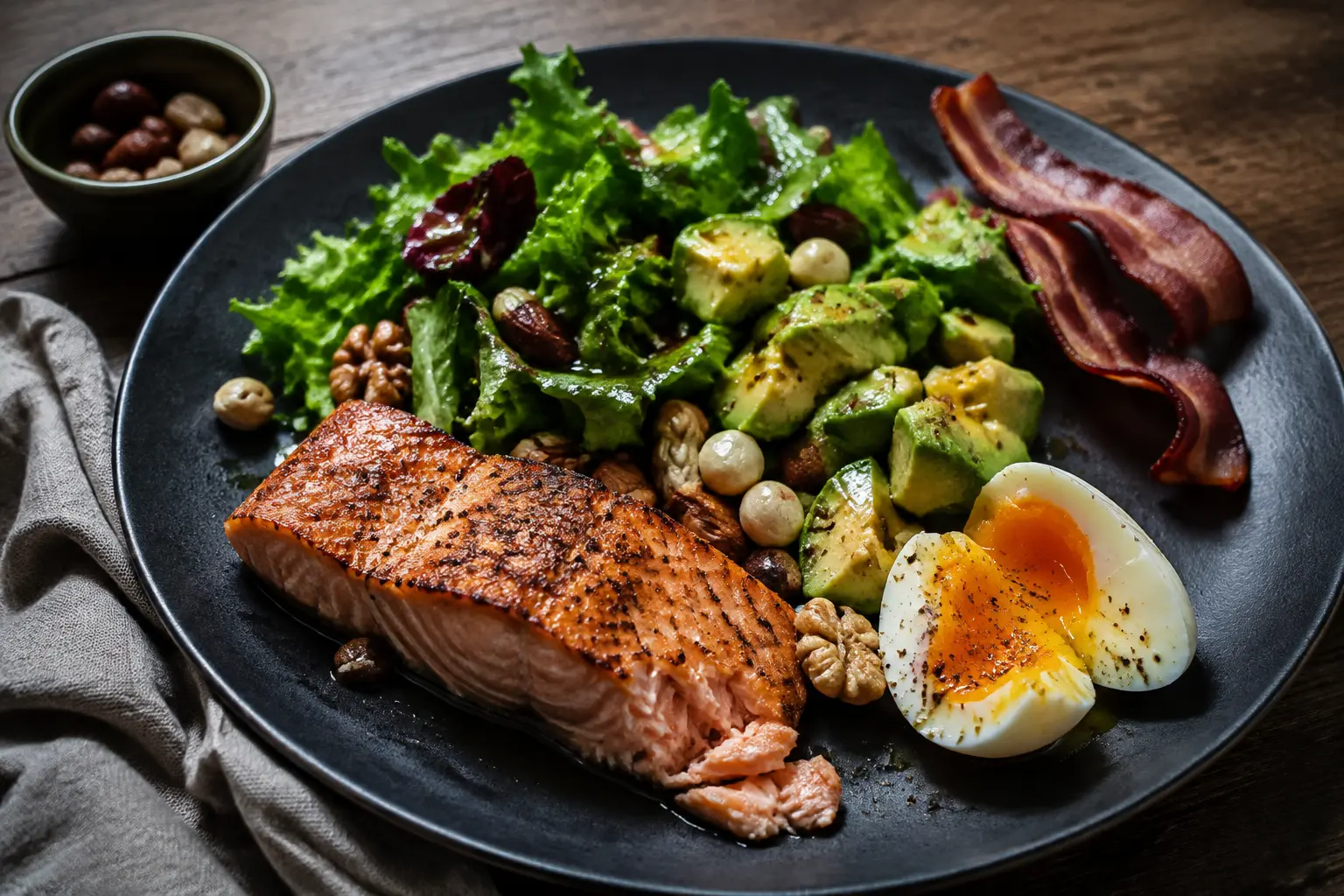
Low carb is not a food-quality exemption
A food does not become a nutritional hero because its carbohydrate number is low. Bacon, salami, butter and cheese can fit some versions of keto, but building every day around processed meat and saturated fat turns one deliberate restriction into a fairly narrow eating pattern.
Diabetes Australia notes reliable evidence that lower-carbohydrate eating can help some people with type 2 diabetes lower average blood glucose in the short term. It also says there is no single best diet for everyone. Results, medication, preferences and the ability to sustain the pattern all matter.
Build around better fats and proteins
Fish, seafood, eggs, chicken, tofu, plain Greek yoghurt, nuts and seeds provide plenty of low-carbohydrate protein options. Extra virgin olive oil, avocado, olives, nuts and seeds bring unsaturated fats. Non-starchy vegetables deliver fibre, potassium, folate and the sense that dinner was made from more than beige animal products.
This version may be less photogenic to the internet's most extreme corner, but it is far closer to a robust eating pattern. Keep processed meat occasional, choose whole cuts more often and let vegetables occupy real space on the plate.
Ketosis is a metabolic state, not permission to stop caring where the food came from.
Do the medical homework
A major carbohydrate reduction can change blood glucose and blood-pressure requirements quickly. People using insulin, sulfonylureas or some other medicines need clinical guidance to reduce the risk of hypoglycaemia or other complications. Keto is not appropriate in every medical situation.
Monitor how you feel, how your bowels behave, whether the plan is socially workable and what happens to relevant blood markers. If the pattern only survives through bars, powders and processed substitutes, the label may be keto while the food has wandered a long way from TooGut's point.
Where this comes from
We favour recognised Australian health bodies, research-led institutions and primary public-health sources.