
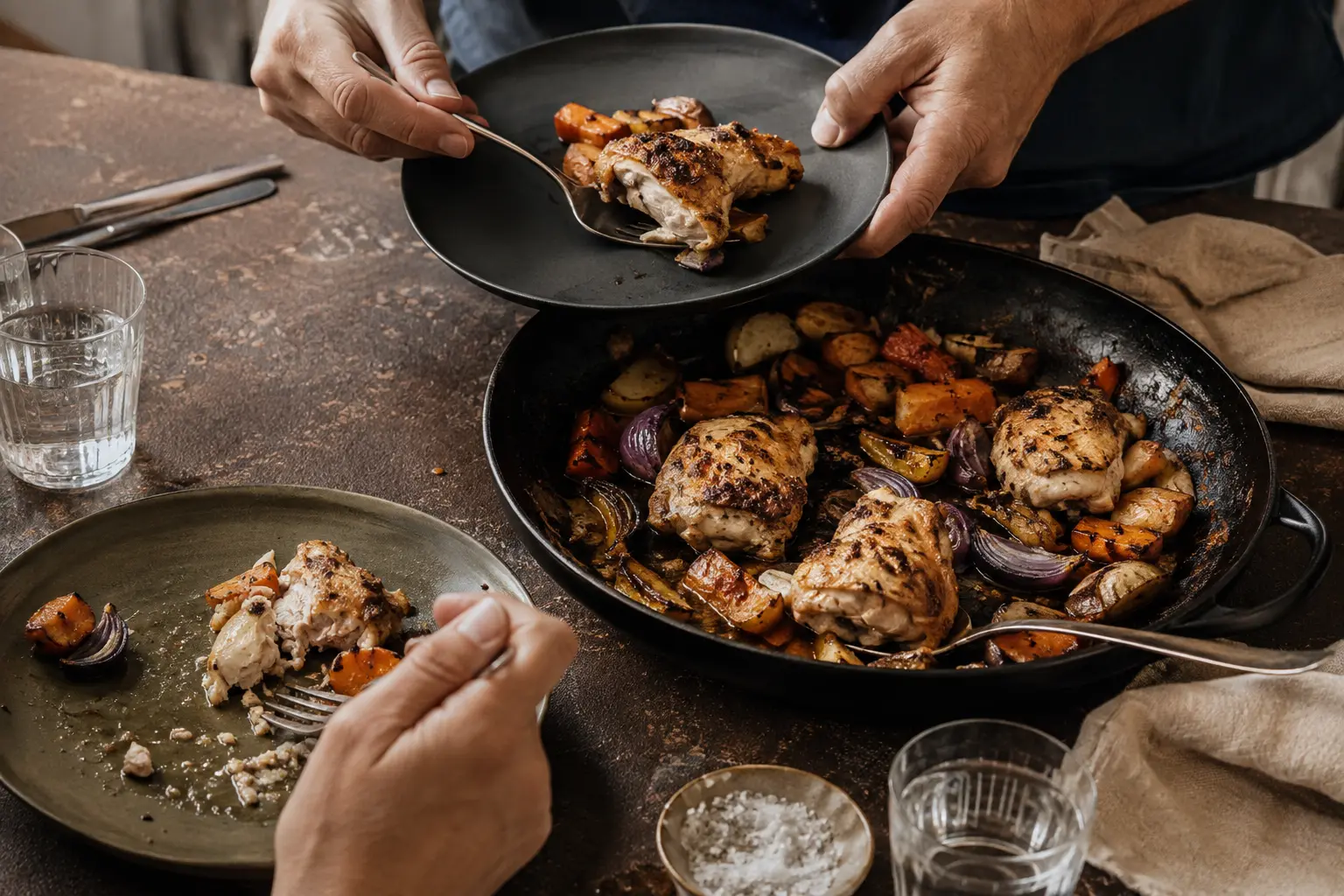
Cooking makes the invisible visible
When you cook, you see the oil, salt, vegetables, protein and portion. When a factory or takeaway kitchen cooks for you, those decisions still happen, but they disappear behind flavour systems, packaging and convenience.
That does not make every restaurant meal bad or every homemade cake healthy. It means the person eating has more control. WHO healthy-diet guidance includes culinary skills and supportive food environments because knowing how to turn ingredients into meals is a real public-health tool.
Build a short menu you can repeat
You do not need fifty signature dishes. Learn a tray bake, a curry, a soup, a stir-fry, an egg dinner and one slow-cooked meal that becomes leftovers. Change the protein, vegetables and seasonings while keeping the technique familiar.
Popular food sites succeed because people repeatedly search for quick dinners, one-pan meals and food that works with ordinary ingredients. The lesson is not to copy the recipe word for word. It is that useful food content solves Tuesday night, not an imaginary life with three spare hours.
The best recipe in your house is the one that prevents a bad takeaway decision when everybody is tired.
Use shortcuts without surrendering the meal
Frozen vegetables, canned beans, tinned fish, pre-washed leaves, jarred tomatoes and a decent spice blend can cut work without turning dinner into an industrial formulation. Read labels, choose simple versions and keep the recognisable food at the centre.
Cook double when the dish freezes well, store it safely and leave room for takeaway when you actually want it. Home cooking should create freedom and confidence, not another perfection contest staged over a chopping board.
Where this comes from
We favour recognised Australian health bodies, research-led institutions and primary public-health sources.