
Fresh is not a moral category
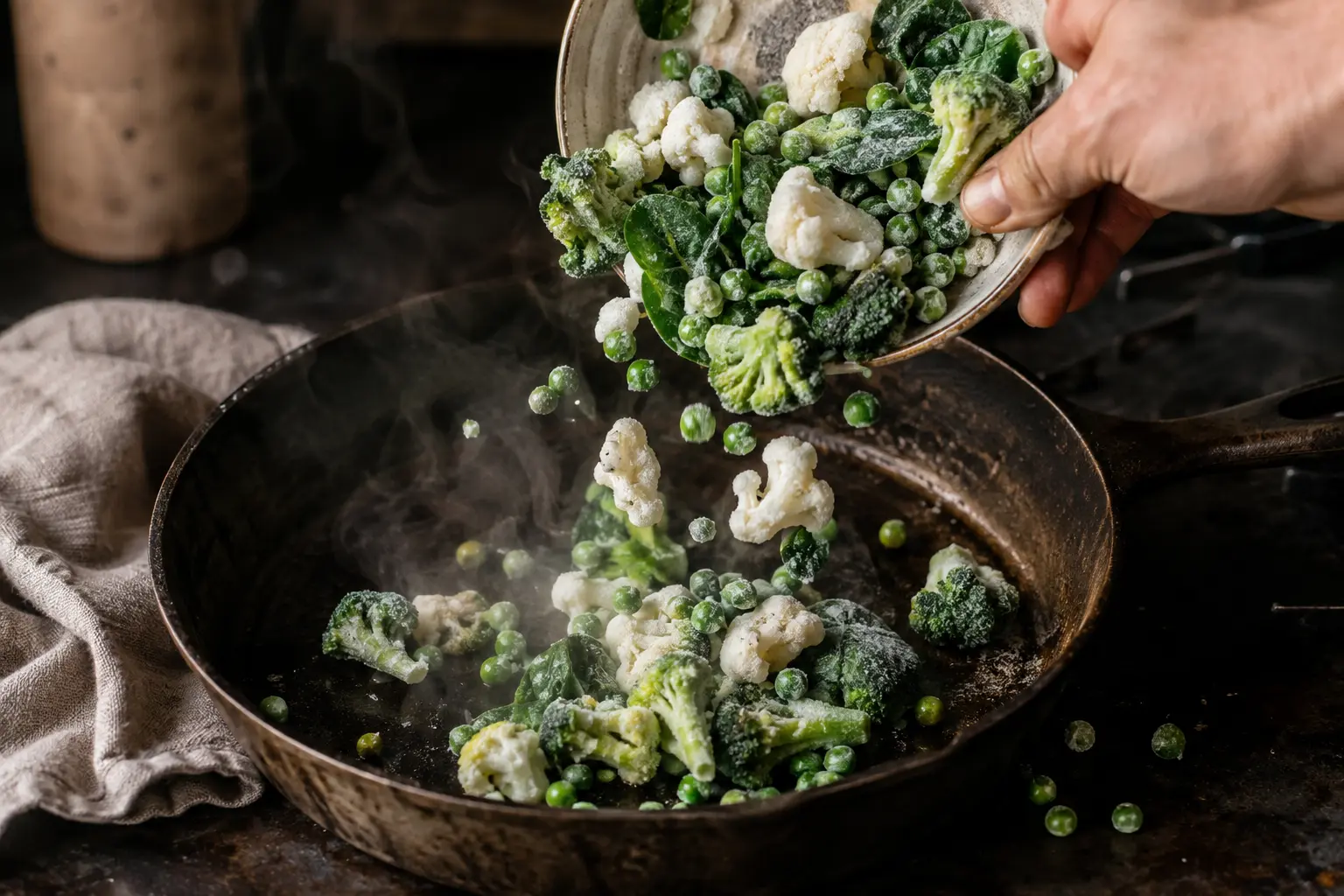
Frozen vegetables are generally processed close to harvest, which helps retain nutrients. The Heart Foundation states that frozen and canned vegetables can be nutritionally equal to fresh produce while costing less and lasting longer.
Fresh vegetables still bring brilliant texture and seasonal variety. The point is not to replace them. It is to stop treating a bag of frozen peas like dietary surrender when the alternative was no vegetables at all.
Buy the ingredient, not the sauce
Look for broccoli, cauliflower, spinach, peas, green beans, corn or mixed vegetables with a very short ingredient list. Creamy sauces, butter coatings and heavy seasoning can bring far more sodium and saturated fat than the vegetable underneath required.
Frozen fruit works the same way. Berries, mango and cherries can go into yoghurt, oats, smoothies or cooked desserts without a race against mould. Choose unsweetened versions and portion what you need.
A vegetable that waits in the freezer is more useful than one performing a slow death in the crisper.
Cook out the water
Do not thaw most vegetables into a puddle and expect fresh crunch. Roast frozen broccoli on a hot, uncrowded tray, squeeze thawed spinach properly, add peas at the end of cooking and let cauliflower rice steam off excess water before seasoning.
Use the freezer strategically: vegetables for stir-fries and curries, herbs in cubes, leftover stock, cooked beans and portioned meals. Convenience is not the opposite of real food when the convenient thing is still recognisable food.
Where this comes from
We favour recognised Australian health bodies, research-led institutions and primary public-health sources.