
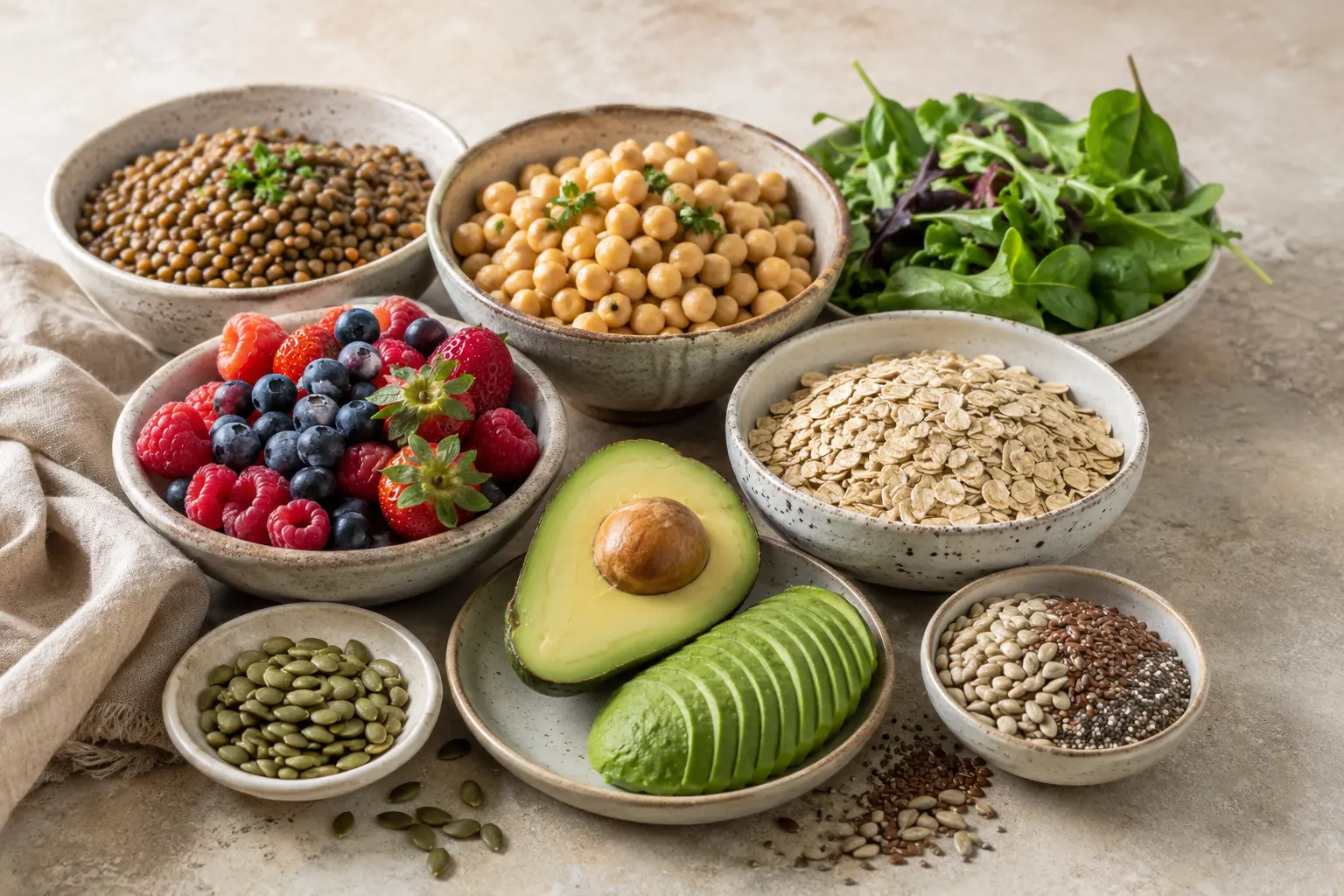
Fibre is a family, not a single thing
Fibre is the part of plant food that is not fully digested in the small intestine. Some fibres hold water, some add bulk and some feed the microbes living further down the line.
That is why oats, lentils, berries and leafy greens are not interchangeable. Your gut benefits from variety, not one heroic scoop of beige powder trying to compensate for a week of low-fibre meals.
A useful Australian benchmark
Australia and New Zealand's Nutrient Reference Values set an adequate intake of 30 g a day for adult men and 25 g for adult women. It is a useful benchmark, not another number to obsess over at every meal.
The common-sense version is simple: oats or wholegrains at breakfast, vegetables and legumes across lunch and dinner, fruit, then nuts or seeds if they suit you. Real food, repeated often.
Increase fibre gradually and drink enough fluid. A sudden jump can be uncomfortable even when the foods themselves are nutritious.
When your gut is sensitive
IBS changes the conversation because some rapidly fermented fibres can increase bloating or discomfort for some people. Monash FODMAP notes that less gas-forming options such as psyllium, linseeds and oats may be better tolerated for some people.
Tolerance is personal. If symptoms are persistent, severe or unexplained, seek a medical diagnosis before removing broad food groups. A dietitian experienced in gastrointestinal nutrition can help adjust fibre without creating unnecessary restriction.
Where this comes from
We favour recognised Australian health bodies, research-led institutions and primary public-health sources.