
What fermentation actually does
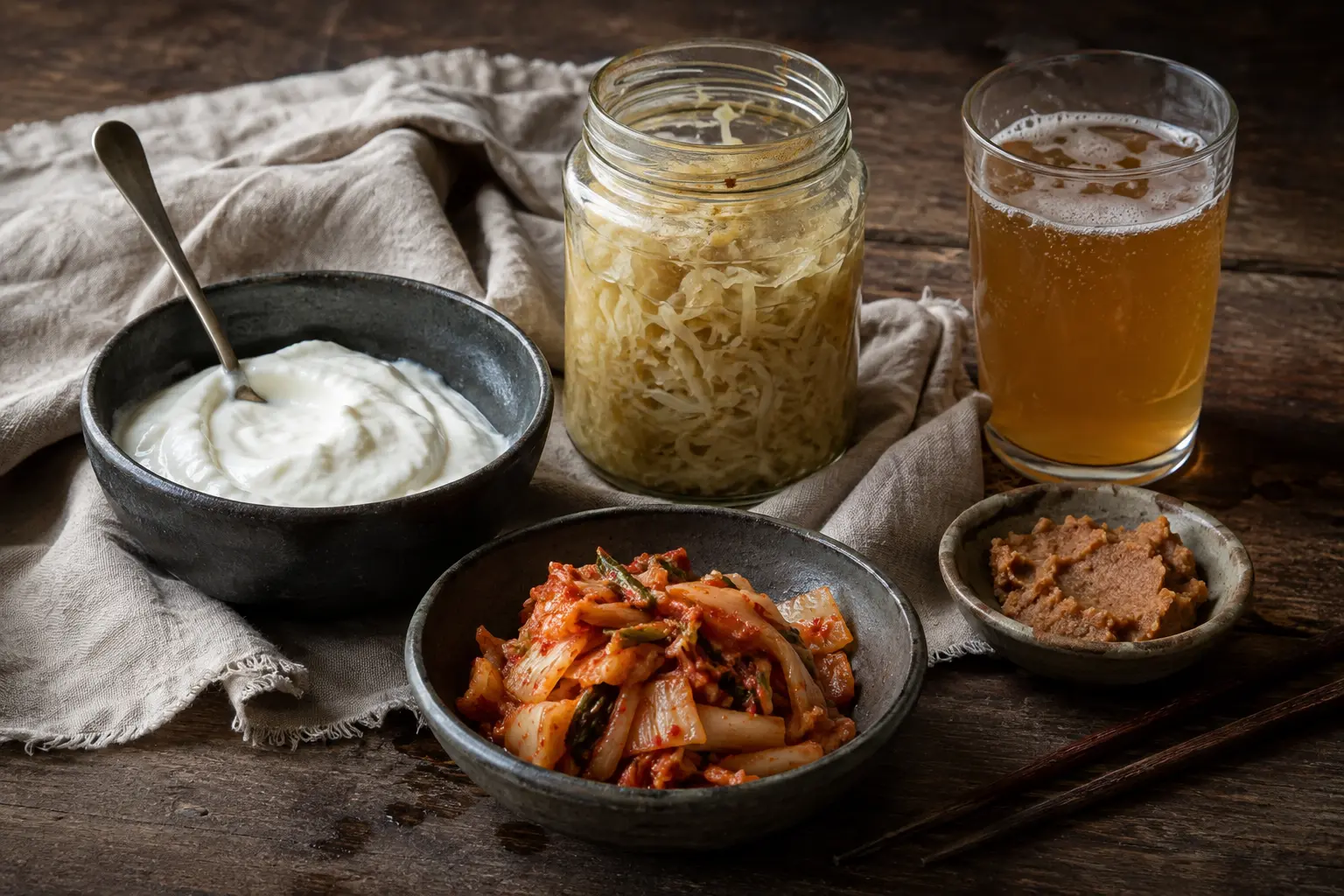
Fermentation uses microorganisms such as bacteria or yeast to transform food. It gives yoghurt its tang, makes cabbage become sauerkraut or kimchi, turns soybeans into miso and creates the acidity and bubbles in kefir or kombucha.
Some fermented foods contain live microbes when eaten. Others are cooked, filtered or pasteurised after fermentation, so the live organisms may no longer be present. That does not make the food worthless. Miso still brings flavour and fermented bread still feeds people. It simply means fermented and probiotic are not interchangeable words.
The evidence is promising, not magical
Research continues to explore how fermented foods affect microbial diversity, inflammation and metabolic health. The field is promising, but foods, strains, serving sizes and study designs vary enormously. A result for a particular yoghurt culture cannot be pasted onto every pickle jar in the supermarket.
A 2026 BBC Good Food review made the practical point well: one yoghurt drink inside a low-fibre diet is unlikely to transform the microbiome. Fermented foods make more sense as part of a varied eating pattern than as a daily apology for everything else.
Useful food is allowed to be useful without becoming a cure, cleanse or personality.
How to bring them in
Start small. Add plain yoghurt to breakfast, use a spoon of kimchi beside eggs, stir miso into a dressing after it leaves the boil, or serve sauerkraut with dinner. Choose products that are not carrying a dessert-sized sugar load or enough sodium to dominate the meal.
People with IBS, histamine sensitivity, immune compromise or specific medical conditions may need individual guidance. Fermented foods can increase bloating when introduced too aggressively. A tablespoon you tolerate regularly is more useful than a jar you force down because an influencer called it medicine.
Where this comes from
We favour recognised Australian health bodies, research-led institutions and primary public-health sources.