
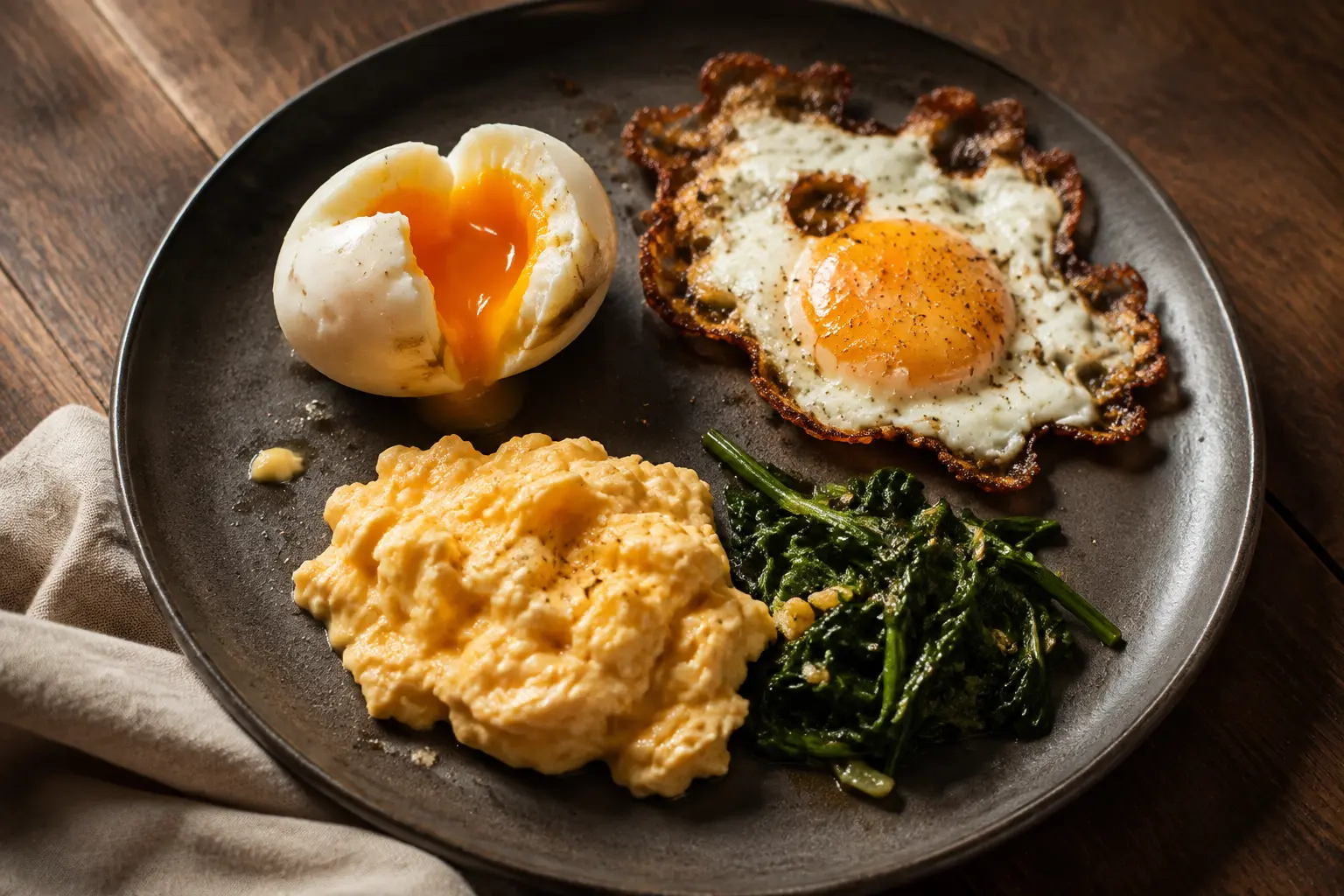
Eggs were never just cholesterol
Eggs provide protein plus vitamin B12, choline, selenium, iron and other nutrients in a cheap, versatile package. The yolk contains cholesterol, but eating cholesterol does not raise blood cholesterol as strongly as saturated and trans fats for most people.
That is why current Australian advice is more relaxed than the blanket limits many people remember. Most healthy people can include eggs without counting every yolk like a minor offence.
The company an egg keeps matters
A poached egg with vegetables and wholegrain toast is a different meal from eggs served beside bacon, sausage, hash browns and buttered white bread. Blaming or praising the egg alone ignores the saturated fat, sodium, fibre and overall pattern around it.
Cook eggs in olive oil, fold vegetables through a frittata, add them to a grain or salad bowl, or keep boiled eggs ready for a simple snack. Real food does not need to become a stunt to be useful.
An egg is an ingredient, not a complete verdict on breakfast.
Who needs the fine print
The Heart Foundation recommends that people with existing heart disease, high LDL cholesterol or type 2 diabetes eat no more than seven eggs a week. Individual medical advice may differ depending on medication, blood results and the rest of the diet.
If your cholesterol is high, look beyond the egg carton. Processed meat, pastries, fried food, takeaway and a low-fibre pattern may be doing far more regular work. Make the whole breakfast better rather than conducting a trial of one yolk.
Where this comes from
We favour recognised Australian health bodies, research-led institutions and primary public-health sources.