
Inflammation is not one enemy
Acute inflammation helps the body respond to injury and infection. Chronic low-grade inflammation is associated with several diseases, but it cannot be diagnosed by a vague feeling after lunch or treated by buying one red-coloured powder.
Social media often turns a complex biological process into a list of forbidden foods and heroic ingredients. That creates great content and anxious shopping. It does not create a medical assessment or a complete eating pattern.
The pattern keeps showing up
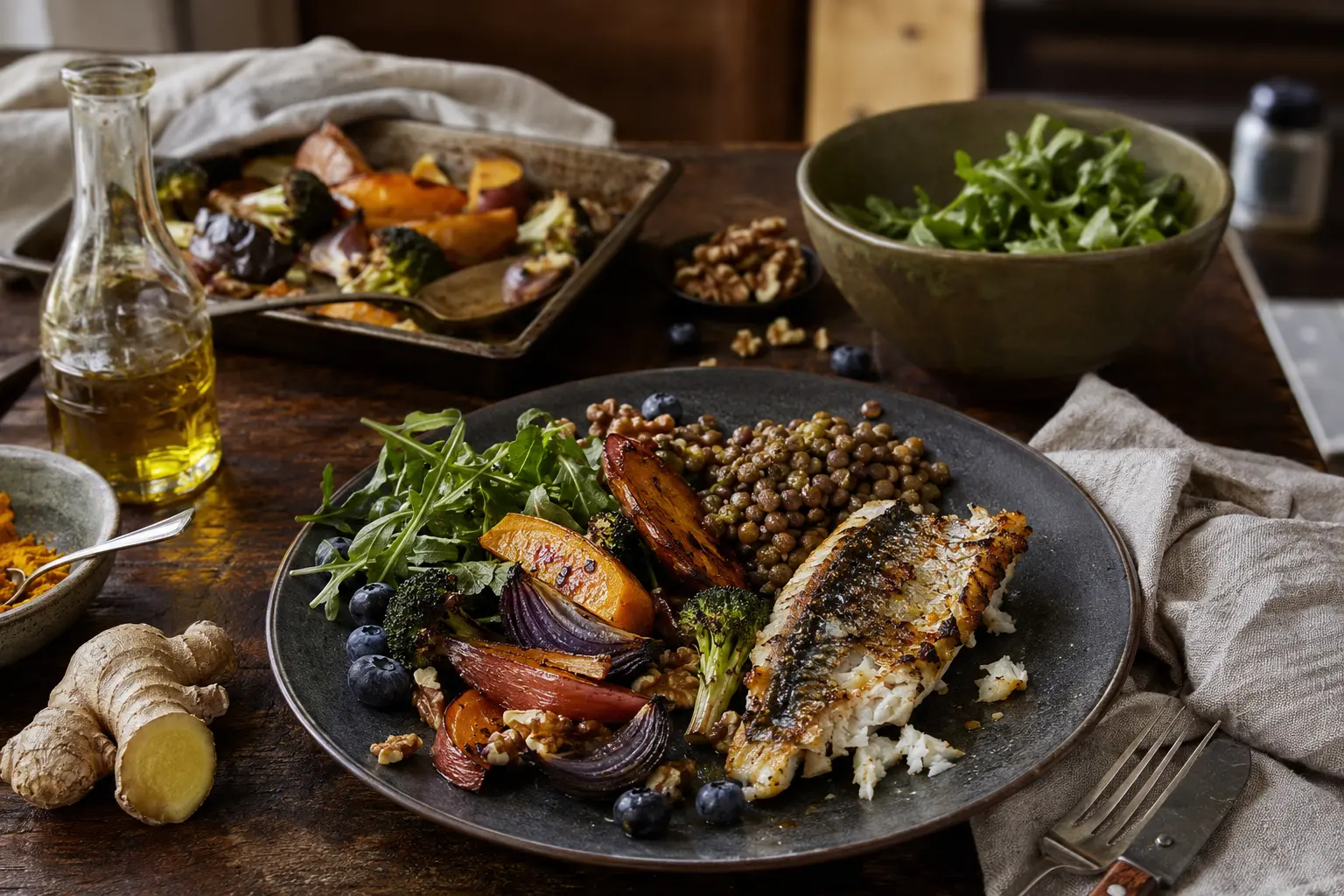
The same foods appear across evidence-based healthy patterns: vegetables, fruit, legumes, wholegrains, nuts, seeds, fish and unsaturated oils. They bring fibre, omega-3 fats, polyphenols, vitamins and minerals in combinations no single capsule can recreate.
Use ginger and turmeric because they make curry taste good. Eat berries because they are delicious and useful. Cook fish, add lentils, pour olive oil and keep packaged fried foods, processed meat and sugary drinks from becoming the daily foundation.
If the anti-inflammatory plan needs twenty supplements, the kitchen has lost the argument.
Do not food-hack a medical problem
Persistent pain, fever, unexplained weight loss, bowel bleeding or severe fatigue needs medical attention. Food can support health, but it should not delay diagnosis or replace prescribed treatment.
For ordinary meals, make the broad pattern boringly consistent and keep treats as treats. That approach will never trend as hard as a miracle ingredient because it cannot be patented, but it is far easier to trust.
Where this comes from
We favour recognised Australian health bodies, research-led institutions and primary public-health sources.